
Tag: personal growth

  • What Is Emotional Maturity? Signs & How to Build It

    What Is Emotional Maturity? Signs & How to Build It

    QUICK ANSWER

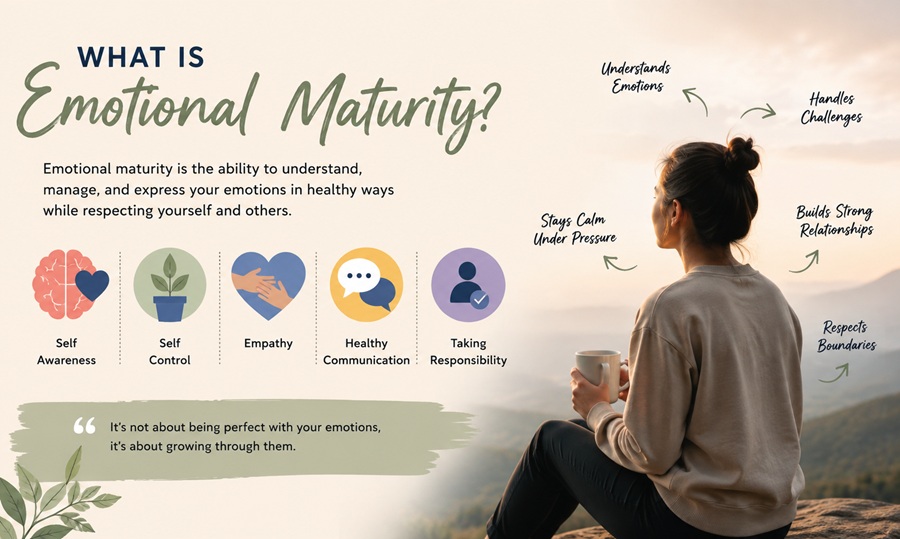
    Emotional maturity is the ability to recognize, understand, and manage your own emotions while responding to others with empathy and self-control, rather than reacting impulsively. It develops through self-awareness and practice rather than simply arriving with age.

    Self-Assessment Checklist: Do You Show These Signs?

    • I can sit with uncomfortable emotions without needing to immediately fix or avoid them
    • I take responsibility for my mistakes without excessive defensiveness
    • I can hear criticism without immediately shutting down or lashing out
    • I don’t expect others to read my mind — I communicate my needs directly
    • I can disagree with someone without needing to ‘win’ the conversation
    • I recognize when I’m reacting from old patterns rather than the present situation
    • I can apologize sincerely without immediately justifying my behavior
    • I give others the benefit of the doubt before assuming bad intent

    Checking most of these boxes consistently — not perfectly, but consistently — is a strong indicator of emotional maturity. Nobody hits all of them all the time, and that’s normal; maturity is measured by pattern, not perfection.

    NOTE: Emotional maturity isn’t the same as being calm all the time. Mature people still feel anger, sadness, or frustration — the difference is in how they express and process those emotions, not whether they have them.

    Why It Matters in Relationships

    Emotional maturity directly affects how conflict gets handled. Two emotionally mature partners can disagree, express hurt, and still stay respectful, because neither one treats the disagreement as a threat to the relationship itself. Without it, small disagreements can spiral into blame, stonewalling, or repeated unresolved fights over the same underlying issue.

    Signs of Emotional Immaturity to Watch For

    • Blaming others reflexively instead of examining your own role
    • Giving the silent treatment instead of communicating directly
    • Struggling to apologize without adding a justification or counter-accusation
    • Needing constant reassurance or validation to feel secure
    • Reacting to feedback with defensiveness rather than reflection
    • Difficulty delaying gratification or managing impulsive reactions
    TIP: If you recognize several of these patterns in yourself, that recognition alone is a sign of growing self-awareness — the first and most important step toward change.

    How to Build Emotional Maturity

    Practice the pause

    Before reacting to something upsetting, build a habit of pausing — even ten seconds — to notice what you’re actually feeling before responding. This small gap interrupts automatic, reactive patterns.

    Get curious about your triggers

    Strong reactions to seemingly small things often point to older, unresolved patterns. Journaling or therapy can help identify what’s really being activated.

    Practice direct communication

    Replace hints, sulking, or passive-aggressive comments with clear, respectful statements of what you feel and need. This is often the single biggest lever for relationship improvement.

    Separate feelings from facts

    Feeling hurt doesn’t automatically mean someone did something wrong. Emotionally mature people can hold both — validating their own feelings while staying open to a fuller picture of the situation.

    WARNING: Emotional maturity develops gradually through consistent practice — expecting overnight change, in yourself or a partner, tends to lead to frustration rather than progress.

    FAQs

    Q: Is emotional maturity the same as emotional intelligence?

    They overlap significantly — emotional intelligence is the broader skill of recognizing and managing emotions, while emotional maturity is often used to describe the consistent, grown-up application of that skill in real situations.

    Q: Does emotional maturity come naturally with age?

    Not automatically — some people develop it early through reflection and experience, while others may remain emotionally reactive well into adulthood without deliberate effort to change.

    Q: Can emotional maturity be learned?

    Yes, through consistent self-awareness practices, therapy, and intentional communication habits over time.

    Q: How can I tell if a partner is emotionally immature?

    Watch for patterns like blame-shifting, silent treatment, or difficulty apologizing sincerely, especially if these show up repeatedly rather than as isolated incidents.

    Q: Why does emotional maturity matter for long-term relationships?

    It directly shapes how conflict is handled, and unresolved conflict patterns are one of the most common reasons long-term relationships break down.