

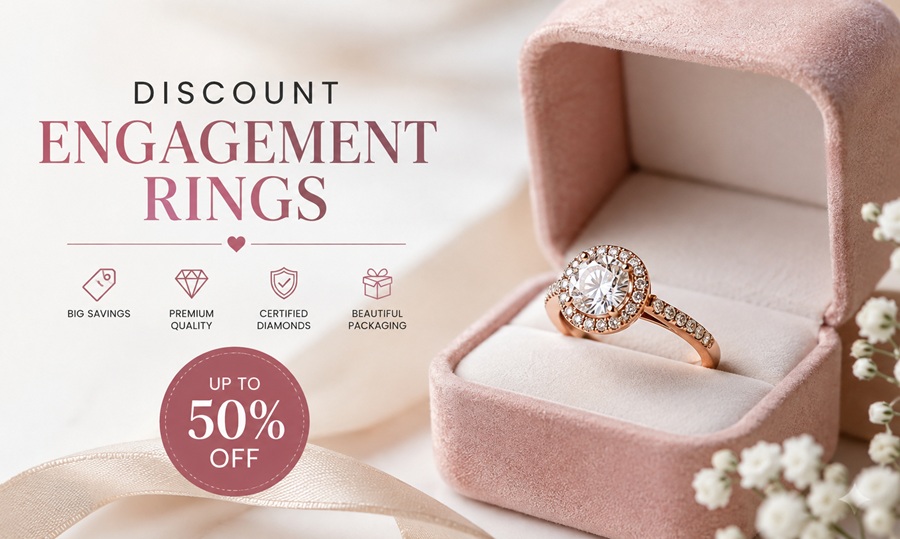
Quick Answer: Genuine discount engagement rings come from lab-grown diamonds, off-peak shopping seasons, slightly-under-carat sizing, and reputable online retailers with lower overhead than traditional jewelers. Avoid deep ‘clearance’ claims from unverified sellers, since these often signal inflated original pricing rather than real savings.
The Truth About “Discount” Pricing
Not all discounts are equal. Some retailers inflate a fictional “original price” to make a markdown look more dramatic than it is — a tactic regulators in several countries have cracked down on. Real savings come from structural factors: lower overhead, alternative diamond sourcing, or smart timing, not just a red sale banner.
Understanding this distinction matters because it changes where you should actually focus your energy as a buyer. Chasing the biggest percentage-off number often leads to disappointment, since that number may be calculated against an inflated baseline rather than genuine market value. A smarter approach is comparing final prices across several reputable retailers for similar specifications, rather than anchoring on any single store’s claimed discount.
Five Ways to Genuinely Save
These strategies reflect actual cost drivers in the diamond and jewelry market, rather than marketing tactics, and can be combined for even greater savings.
- Choose a lab-grown diamond instead of mined — typically 30–40% less for the same specs, since lab-grown stones don’t carry the same rarity premium
- Shop slightly under round carat weights (0.90ct instead of 1.00ct) for a meaningful price drop with minimal visible difference to the naked eye
- Buy during traditional sale windows — Black Friday, post-holiday January clearance, and end-of-quarter retailer promotions, when genuine markdowns are more common
- Consider a halo setting, which can make a smaller center stone appear larger without the carat-weight price jump
- Buy online from established retailers with lower overhead than mall-based jewelers, who pass some of those savings on through everyday pricing rather than occasional sales
Comparing Ring Types by Typical Savings
| Ring Type | Typical Price vs Traditional Mined Solitaire | Trade-off |
| Lab-grown diamond | 30–40% less | None visually; slightly lower resale value |
| Moissanite center stone | 60–80% less | Different sparkle quality, higher refractive index |
| Halo setting, smaller center | 20–30% less for similar visual size | More prongs and metal to maintain |
| Slightly under-carat (0.9 vs 1.0) | 10–15% less | Negligible visible size difference |
Where Not to Look for Discounts
Unverified marketplace listings, social media ads promising 90% off luxury brands, and sellers who refuse to provide independent certification are the most common sources of buyer regret. If a deal seems disconnected from typical market pricing for the stated specs, it usually is.
It’s also worth being cautious of pawn shops and unverified auction sites unless you have significant expertise in diamond grading yourself, or are working with an independent appraiser to verify the item before purchase. The apparent savings rarely outweigh the risk of ending up with a misrepresented stone.
Negotiating With Traditional Jewelers
Many buyers don’t realize that pricing at independent, non-chain jewelers is often more negotiable than the sticker price suggests, particularly on setting costs rather than the certified stone itself. Asking directly about any current promotions, price matching against a competitor’s quote, or bundling the ring with future services like resizing or an anniversary band can sometimes unlock savings that aren’t advertised outright.
Financing Options and Why to Be Cautious
Many retailers offer in-house financing or “buy now, pay later” plans, and while these can make a ring more immediately affordable, they’re worth approaching carefully. Deferred interest plans in particular can result in a large retroactive interest charge if the balance isn’t paid in full by the promotional deadline, turning what looked like a discount into a significantly more expensive purchase overall.
If financing is necessary, comparing the total cost across a few different plans — including any origination fees or deferred interest terms — rather than focusing only on the monthly payment amount gives a clearer picture of what the ring will actually cost by the time it’s paid off.
Setting Choices That Stretch a Discount Further
Beyond the stone itself, setting choices can meaningfully affect total cost. A simple solitaire setting typically costs less in labor than an elaborate halo or pavé design, since fewer small stones and less intricate metalwork are involved. Choosing a slightly simpler setting and directing more of the budget toward the center stone’s quality is a common strategy among buyers looking to maximize visual impact per dollar spent.
Timing Your Purchase Around Market Factors
Diamond and precious metal pricing can fluctuate based on broader market conditions, and while most buyers won’t want to actively time the market the way a commodities trader might, being aware that gold and platinum prices shift over time is useful context. Some jewelers adjust setting costs accordingly, so asking whether current metal pricing affects a quote is a reasonable question that occasionally reveals additional flexibility.
Frequently Asked Questions
1. Are lab-grown diamonds a legitimate way to save money?
Yes — they are chemically and optically identical to mined diamonds and typically cost significantly less for the same grade and size, making them one of the most reliable ways to save without any visible compromise.
2. Is it safe to buy a discounted engagement ring online?
Yes, provided the retailer offers independent certification, a clear return policy, and secure payment options, and reviews specifically mentioning the return or exchange process rather than just product photos.
3. When is the best time of year to find engagement ring sales?
Black Friday, the days following major gifting holidays, and end-of-quarter retailer promotions tend to offer the deepest legitimate discounts, since these periods reflect genuine retailer incentives to move inventory.
4. Does a lower price always mean lower quality?
Not necessarily — pricing differences often come from sourcing method (lab-grown vs mined) or retailer overhead rather than stone quality, so comparing certified specifications directly is more reliable than comparing price alone.
5. Can I negotiate the price at a traditional jewelry store?
Often, yes, particularly on setting costs — asking about current promotions or price matching against a competitor’s quote can sometimes reveal savings that aren’t advertised upfront.
6. Is ring financing a good idea if I want to save money?
Financing can help with immediate affordability, but deferred interest plans can become costly if not paid off within the promotional window, so comparing total repayment cost matters more than the advertised monthly payment.
7. Does the setting style affect how much I can save?
Yes — simpler settings like solitaires typically cost less in labor than elaborate halo or pavé designs, letting you direct more of the budget toward the center stone itself.
Real savings on an engagement ring come from understanding what actually drives cost — sourcing, carat rounding, and retailer overhead — rather than chasing flashy percentage-off banners. A well-researched buyer can often secure a ring that looks every bit as impressive as a full-price piece for meaningfully less, and taking the time to compare specifications rather than advertised discounts across a few reputable retailers is the single most reliable path to a genuinely good deal.