

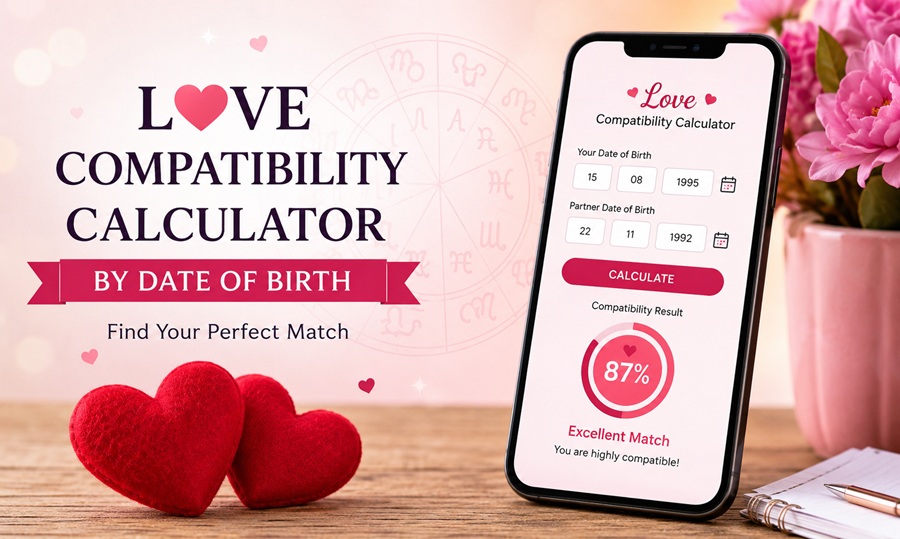
Love compatibility calculators based on date of birth typically draw on astrology (zodiac sign matching) or numerology (life path number calculations) to generate a compatibility score. These tools are best used as entertainment or conversation starters rather than scientifically validated predictors of relationship success.
What These Calculators Actually Do
Most “love compatibility by date of birth” tools work through one of two systems: Western astrology, which uses your birth date to determine your zodiac sign and compares elemental and planetary compatibility with a partner’s sign, or numerology, which reduces birth dates to a single “life path number” and evaluates compatibility based on numeric relationships between those numbers.
Some more elaborate calculators combine elements of both systems, or incorporate additional frameworks like Chinese zodiac compatibility, which is based on birth year rather than the Western zodiac’s focus on birth month and day. The proliferation of these tools online reflects enduring cultural interest in finding structured, symbolic ways to think about relationship compatibility.
How the Astrology Method Works
Zodiac compatibility is based on element groupings — fire, earth, air, and water signs — with certain combinations traditionally considered more harmonious than others. Fire and air signs are generally considered complementary, as are earth and water, while some calculators go further and incorporate full birth charts (including birth time and location) for more detailed analysis.
A full birth chart comparison, sometimes called synastry in astrological terminology, considers the position of multiple planets at the time of each person’s birth, not just their sun sign. Practitioners who take astrology seriously often consider sun-sign-only compatibility — the version most simple online calculators use — a significant oversimplification of the full synastry process.
How the Numerology Method Works
Numerology-based calculators add together the digits of a birth date until reaching a single number (1–9, with some exceptions for master numbers like 11 or 22), then compare life path numbers between two people using established compatibility charts specific to numerology traditions.
Different numerology traditions sometimes disagree on exactly how these calculations should be performed or interpreted, which is worth keeping in mind if you compare results across multiple calculators and notice inconsistencies — this reflects genuine variation within numerology practice itself, not necessarily an error in any particular tool.
Should You Take the Results Seriously?
There is no scientific evidence supporting astrology or numerology as reliable predictors of relationship compatibility or success. That said, many people enjoy these tools as a fun, low-stakes way to spark conversation or reflect on relationship dynamics — the value lies more in the discussion it prompts than any predictive accuracy.
Psychologists studying why these tools remain popular despite lacking scientific support often point to the Barnum effect — the tendency for people to find personally meaningful even generic or broadly applicable statements. This helps explain why compatibility descriptions often feel accurate even though they’re not based on validated predictive science.
A More Reliable Alternative
Relationship researchers point to factors like communication style, shared values, conflict resolution patterns, and emotional responsiveness as far stronger predictors of long-term compatibility than birth date-based systems. Using a compatibility calculator as an icebreaker, then following up with real conversations about these deeper factors, tends to be the most useful approach.
How to Use These Tools Responsibly
- Treat results as a conversation starter, not a verdict on whether a relationship will work
- Avoid ending a promising connection solely because a calculator suggests low compatibility
- Use any surprising results as a prompt to ask genuine questions about values and communication style
- Remember that different calculators and traditions can produce different, sometimes contradictory, results for the same two people
The Cultural Appeal of Compatibility Systems
Beyond any predictive claims, astrology and numerology-based compatibility systems tap into a long-standing human interest in finding structure and meaning in relationships. This cultural appeal helps explain why these tools remain popular across generations and cultures, even as scientific understanding of relationship compatibility has advanced through very different research methods entirely.
Frequently Asked Questions
Are date of birth compatibility calculators accurate?
There is no scientific validation for astrology or numerology-based compatibility systems, so results should be viewed as entertainment rather than reliable prediction of relationship success.
What information does a typical calculator need?
Most require both people’s full birth dates, and some astrology-based versions also request birth time and location for more detailed chart analysis known as synastry.
Is astrology or numerology compatibility more popular?
Astrology-based compatibility remains more widely used and recognized, though numerology has a dedicated following, particularly in relationship coaching communities and among enthusiasts of the specific tradition.
Can these tools actually harm a relationship?
Taking results too seriously as a definitive verdict on compatibility, rather than as a lighthearted prompt, is the main risk — real compatibility depends on factors these tools don’t measure at all.
What should I do if a compatibility calculator gives a poor result?
Treat it as a conversation starter rather than a warning sign — a low score from an unvalidated system shouldn’t outweigh genuine connection, shared values, and real communication with a partner.
Conclusion
Love compatibility calculators based on date of birth can be an entertaining way to explore astrology or numerology with a partner, but they shouldn’t replace genuine conversations about values, communication, and shared goals. Used as a fun starting point rather than a verdict, they can add a playful layer to getting to know someone new, while the deeper work of building real compatibility still comes down to the conversations these tools can only ever prompt, not replace.