

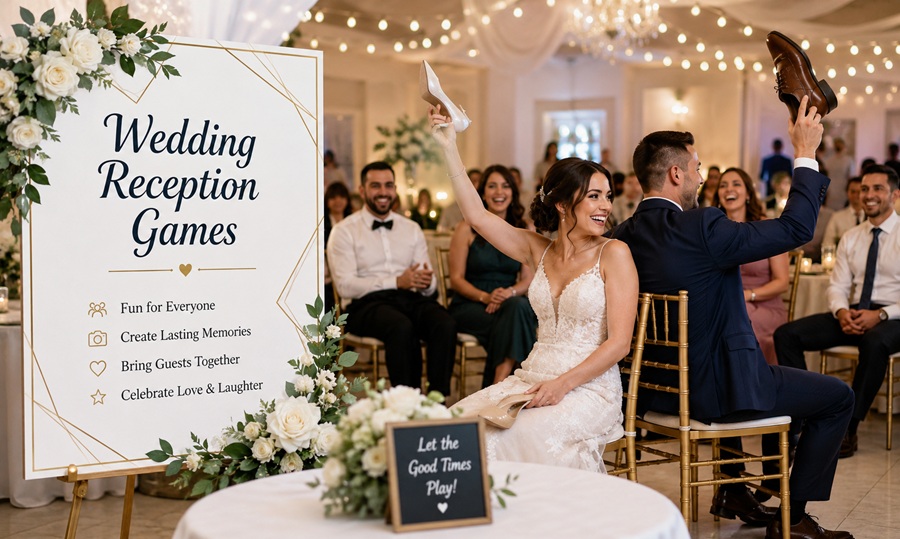
A great wedding reception isn’t just about the ceremony recap and the first dance — it’s the moments that get guests laughing, out of their seats, and talking about the night for years afterward. Reception games are one of the most reliable ways to make that happen, especially during the lulls between dinner and dancing. Below is a buying-guide-style breakdown of 25 games, organized so you can quickly match a game to your group size, setup time, and reception vibe.
Quick Comparison Table
| Game | Group Size | Setup Time | Best For |
| The Shoe Game | 2 (bride & groom) | 5 minutes | Comedy, guest engagement |
| Newlywed Game | 2 + host | 10 minutes, needs planning | Personal storytelling |
| Money Dance | All guests | None | Traditional receptions |
| Wedding Trivia Cards | Whole reception | 15 minutes prep | Icebreaker during dinner |
| Bouquet & Garter Toss | Singles at reception | None | Traditional milestone moment |
| Photo Booth Props Game | Small groups | 10 minutes setup | Casual, ongoing entertainment |
| Anniversary Dance | All couples | None | Sentimental, multi-generational |
| Guess the Couple Baby Photos | Whole reception | Requires advance photos | Nostalgic, easy to run |
Classic Games Every Wedding Can Use
- The Shoe Game — the couple sits back-to-back, holds up each other’s shoe to answer ‘who’s more likely to’ questions
- The Newlywed Game — a host asks the couple questions about each other, answered simultaneously on cards
- Money Dance — guests pin cash to the couple in exchange for a dance
- Bouquet and Garter Toss — a reception staple for single guests
- Anniversary Dance — married couples are slowly eliminated by years married until the longest-married couple remains
- Guess the Baby Photos — guests match childhood photos to the bride and groom
Games for Tables and Dinner Time
Dinner service naturally has downtime while food is served and cleared. These games work well seated, at individual tables, without requiring guests to move around.
- Wedding trivia cards placed at each table setting
- ‘How well do you know the couple’ bingo cards
- Advice cards where guests write marriage advice for the newlyweds
- Table-by-table ‘best memory of the couple’ sharing prompts
- A prediction card guessing where the couple will be in five years
High-Energy Dance Floor Games
Once the dance floor opens, these games are built to keep energy high and pull even reluctant guests into the fun.
- Musical chairs, wedding edition
- Dance-off bracket with elimination rounds
- ‘Freeze dance’ where the DJ randomly stops the music
- Coordinated line dance taught mid-reception
- Bridal party lip sync battle
Games Great for Kid-Friendly Receptions
- Wedding-themed coloring stations doubling as a game with prizes
- Scavenger hunt for reception details (find the cake topper, count the centerpieces)
- Kids’ version of the newlywed game about their own parents (if it’s a family wedding)
- A simple ring toss or lawn game set up outside the main reception area
- Photo booth challenges designed for kids
Low-Effort, High-Payoff Options
If you’re planning a smaller or more low-key reception, these require almost no setup but still add a memorable moment.
- A simple ‘guess the number of’ jar (candies, buttons) with the couple’s love story as the theme
- An open mic moment for toasts turned into a lighthearted roast round
- A ‘first dance song’ guessing game before the DJ plays it
- A polaroid guestbook station where guests leave a photo and a note
- A playlist request card at each table
| Tip: Choose no more than 3–4 games for the whole reception. Too many activities can eat into dancing and mingling time, which most guests ultimately remember more fondly. |
How to Time Reception Games Throughout the Night
Timing matters as much as the game itself. Slot a lighter, seated game — like table trivia or advice cards — during the natural lull while dinner is being served or cleared. Save higher-energy dance floor games for after dinner, once the floor has organically opened and guests have loosened up with a drink or two. Sentimental games, like the anniversary dance or bouquet toss, tend to land best either right before or shortly after the first dance, when the emotional tone of the room is already tilted toward the couple.
Avoid stacking multiple games back to back without a break; even fun activities can start to feel like a checklist if guests don’t get breathing room to mingle, eat, and dance in between. A good rule of thumb is spacing games roughly 30–45 minutes apart across the reception timeline.
Briefing Your DJ or Host in Advance
Whoever is running the games — typically the DJ, MC, best man, or maid of honor — should have a clear, written rundown well before the event: which games, in what order, roughly what time, and any props or materials needed. Games tend to fall flat not because the concept was bad, but because the person running them wasn’t fully prepared, leading to awkward pauses or confusion about the rules. A five-minute pre-reception huddle with your host to walk through the plan can prevent most of these hiccups.
Budget Considerations for Reception Games
Most of the games on this list require minimal to no additional budget — a deck of trivia cards, a few printed signs, or props you already have on hand. A small number, like a professional photo booth rental or custom-printed guestbook materials, will add cost. If budget is tight, prioritize the games with sentimental or comedic payoff (the shoe game, the newlywed game) over the ones that primarily rely on props or rentals, since those tend to generate the most memorable moments per dollar spent.
Adapting Games for Cultural and Family Traditions
Many couples blend classic reception games with traditions specific to their culture or family background, and this is well worth planning for intentionally rather than as an afterthought. If your reception includes guests from multiple cultural backgrounds, consider adding a brief explanation card or having your emcee introduce the tradition’s meaning before it happens — this helps all guests feel included in the moment rather than confused bystanders. Blending a culturally significant tradition with a lighter, universally understood game (like trivia or the shoe game) often creates the most balanced, inclusive reception flow.
Handling Guests Who Don’t Want to Participate
Not every guest enjoys being pulled into interactive games, and it’s worth planning for this rather than being caught off guard. Games that involve volunteers rather than mandatory group participation — like the shoe game or a dance-off bracket — naturally accommodate more reserved guests, who can simply enjoy watching. For games designed to involve the whole room, like trivia cards or scavenger hunts, framing participation as entirely optional in how your host introduces it helps avoid pressuring anyone who’d rather sit back and enjoy the evening at their own pace.
Frequently Asked Questions
What is the most popular wedding reception game?
The shoe game and the newlywed game are consistently among the most requested reception games because they’re comedic, low-cost, and easy for a DJ or host to run.
How many games should you plan for a wedding reception?
Most wedding planners recommend 3–4 games spread across dinner and the dance floor to keep the night moving without cutting into open dancing time.
Are wedding reception games appropriate for formal weddings?
Yes, though formal receptions typically favor understated options like the anniversary dance or table trivia cards over high-energy dance floor games.
What games work best for weddings with a lot of kids?
Scavenger hunts, coloring stations, and simple lawn games tend to keep kids engaged without requiring constant supervision from parents.
Do reception games need a host or emcee?
Interactive games like the newlywed game or shoe game usually need someone — often the DJ, best man, or maid of honor — to guide the group and keep the pacing lively.
The right mix of wedding reception games depends less on trends and more on your guest list — how many kids will be there, whether your crowd leans toward high-energy or low-key, and how much time you have between courses. Pick a small handful from this list, brief your DJ or host in advance, and you’ll have built-in moments of laughter that guests remember long after the cake is gone.